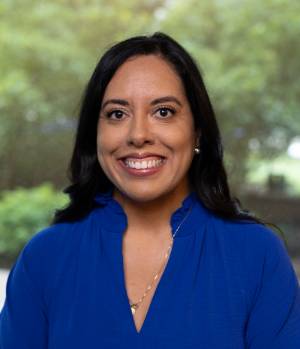
Eileen Wertzberger
Assistant Professor
Director, Office of Field Experience
Before my time at Kansas State University, I taught English for 13 years. I taught for 10 years at Junction City High School, just down the road from us. Then I taught for three years at Wabaunsee High School, which is in the town where my family lives. I had 13 amazing years in the classroom. I loved teaching literature, I loved teaching composition, but there’s always that next step or that next goal. I came to K-State in 2018 to pursue my doctorate full-time. I’ve been here ever since. I’m a proud K-Stater. I have three degrees, all from Kansas State University. I bleed purple, just like many of us in our department.
What are your research interests?
Most of my work is embedded in teacher preparation and the ways we better prepare and support pre-service teachers, particularly in their reflective practices. I’m also working on ways we can support cooperating teachers in their work as mentors to pre-service teachers—the training and guidance they need to help them develop the skills necessary to engage pre-service teachers in reflecting on practices. I work on looking at induction to teaching, like the scope of the teacher trajectory, how they start as pre-service teachers and then adjust to their first year of teaching.
How would your students describe you as a teacher?
Authentic, human and meaningful. It’s less about my teaching experience and more about the students’ experience in my courses. I want my students to see their humanity at the center of what we’re doing. I want their voices to feel heard in what we’re doing. I want them to feel challenged in appropriate and meaningful ways.
What are some of the challenges you faced when you began teaching in the classroom?
As a first-year teacher, I struggled with classroom management. I felt that I would take a lot of things they did or didn’t do very personally. I had to separate myself from their behaviors. They’re not doing the work because they like or dislike me. Focus on what your students need and be the type of teacher they need you to be. Once I de-centered myself, I found that classroom management and teaching my content became a lot easier because it wasn’t about me; it was about helping my students.
What is something that makes you unique that maybe students don’t know about you?
I don’t know that my students ever realized that I love to write poetry. I think that would be something that would surprise them because I don’t think they would hear me speak and be like, "She's really poetic." They would be like, "She's really direct." I think they would be shocked by that. It’s not like I write sonnets or anything like that. It tends to be free verse. I don’t really have one specific style, but I do tend to write a lot of poetry about being Puerto Rican, the Puerto Rican diaspora and the folklore of my culture. I like poetry about places, space and spirits, like the spirit of a place. I’ve also written poetry about Kansas.
What is one piece of advice you would give to incoming MAT students?
I think the piece of advice that would have been helpful to me was when you go into teaching, you tend to center yourself. You’re still trying to figure out who you are as a teacher. That can make interactions with students more difficult, because if they decide they don't want to do your work, you take it personally. Then it becomes a power struggle. When you’re able to de-center yourself and center your students’ needs, you will become a better teacher over time. We often tell people, "Just be yourself." I think that’s really bad advice, because my students didn’t need me to be myself. They needed me to be the type of adult who could create an environment where they felt safe and could learn. Who I am with my friends and who I am with my family is not necessarily who I should be when I'm with my students. I recommend they develop a professional persona that allows them to be who their students need them to be.