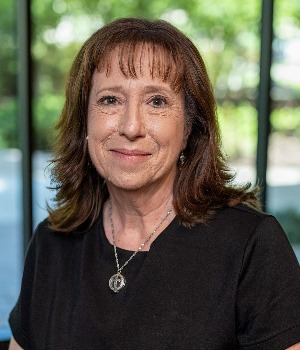
Vicki Sherbert
Associate Professor
Secondary Literacy
I’ve had a long and wonderful tenure in education. I taught in elementary school for 16 years, and then I moved to middle school. I taught sixth-, seventh- and eighth-grade reading and English language arts, social studies and some science classes. I worked with high school students on digital literacy. I was the testing coordinator and the technology coordinator. I coached high school varsity basketball and volleyball, as well as middle school basketball and volleyball. I had a lot of opportunities to really get to know my students. I earned my master’s degree in 1994 from K-State and then finished my Ph.D. in 2011.
All the time I was in the classroom, I loved teaching. I really loved public education, but I was always hungry to learn more. After I finished my Ph.D., I was given the opportunity to teach here at K-State in 2013. It’s been a real joy to work with pre-service teachers. That’s been a real passion of mine.
In 2022, I served as an assistant department chair in our Department of Curriculum and Instruction, which was a really cool opportunity because I was able to work with my colleagues in a new and different way. I was still working on research and advising students, but I was focused mainly on the department's operations, learning leadership skills and working on the administrative side. A year and a half ago, I came back to teaching and researching full-time in the Master of Arts in Teaching program.
What are your research interests?
My initial research examined adolescent literacy, framed through the experience of a family member’s military deployment. That stemmed from my dissertation, when I lived 23 miles from Fort Riley. I had many students who were military-connected, and I realized I’d never spoken with them about what that experience was like. Part of my research was about how they use literacy and the skills I was teaching as they navigated the circumstances of deployment. Is it helping at all? Does it help them mitigate the stress? When I came to K-State, I continued along that line.
I had another research project in which I interviewed elementary teachers or pre-service teachers who had no military background themselves but who student-taught in an all-military school where students were military-connected. I wanted to know, did you feel prepared for this setting and for the circumstances? What did you learn from this?
I also have always been very passionate about rural education. My background in public education was in a rural school district, and we had that unique combination of military-connected students and rural students. I wanted to examine the rurality piece, focusing on how teacher candidates felt prepared and their attitudes toward teaching in rural school districts.
How has being an advisor played a role in your career?
The advising piece is really important. I have several doctoral students for whom I’m the major advisor. I’m also on several doctoral committees and serve as the major advisor for the MAT students in secondary English language arts as well as other Master’s students.
I have to say advising is truly a joy for me. I see my role as helping guide them from where they are and thinking about their hopes and dreams. What they want to do with their degree if they want to continue in public education. It’s a cool opportunity for me to work with students across the state or across the country as well as internationally. Being part of their journey and seeing their passion for education in everything they do is something I really love. It’s an important piece of my professional work.
What kind of environment did you provide for your students?
When I first became a teacher, I wanted students to feel safe and to feel like my classroom was going to be someplace they wanted to come every day. I wanted to be a teacher whose students knew their teacher wanted them there and were glad they were there.
That’s who I tried to be as a beginning teacher. I try to take that into my Master of Arts in Teaching classes, too, when we’re responding to discussion posts or to videos. This is your earliest professional learning community. We learn from and inspire each other, but sometimes we have to build each other up.
How would you say your students describe you as a teacher?
I hope my students would say that I am caring, respectful, and connected. I hope they know I am respectful of their journey, where they’ve been, where they are right now and where they’re headed in the Master of Arts in Teaching program or any other degree program.
I hope that they can see that I’m passionate about this content area, English language arts. I hope they see me as trustworthy; someone they can come to long after their degree program is over. Some of my greatest treasures are emails I’ve received from students in my undergraduate degree program or in the MAT program who reach out to tell me what they’re doing.
What is your advice for incoming MAT students?
My advice to incoming MAT students is to have confidence in yourselves. Value what you’ve already learned and what you’ve already achieved up until this point. Be ready to bring your experience to the program as you work on assignments or interact with your peers, professors or your GradCats.
There is great value in everything that you’ve done up until this point. Be confident about what you’re able to learn and the things that you’re crafting to take on into your own classroom after you finish the program. Give yourself grace to recognize you’re taking on a lot here. Many of you have families and are currently working in other circumstances while taking classes. Also, reach out to your faculty. We truly care about you and your success in the program.
If you have something wonderful that you want to share, something that went super well, or maybe if you’re worried about something, don’t worry for more than two minutes. Reach out to your GradCats and your faculty members because we want to make this as beneficial and fortifying as possible for you.