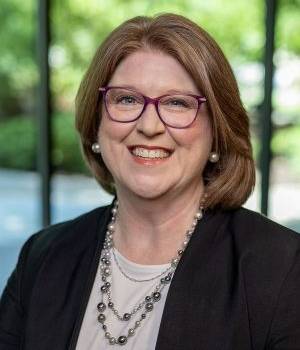
Beth Pesnell
Teaching Assistant Professor
Elementary Science and Mathematics Education/STEM Education
I have been an educator for 29 years. Before Kansas State University, I spent 15 years in public elementary classrooms, where I taught first, second and third grade. I taught K-5 English as a Second Language, math, reading and science interventions. Then I spent seven years at the district level as a math and science curriculum specialist for elementary and later for middle school. When I decided to pursue my doctorate, I stepped away from teaching full-time and traveled across the country to work with STEM teachers and administrators.
After earning my doctorate, I started working at K-State in the fall of 2021. I teach undergraduate and graduate courses in elementary science and math methods. I additionally work in our elementary STEM methods course.
What made you decide to join the K-State faculty?
I was working on my doctorate, and I knew I wanted to work with pre-service teachers. Then COVID hit. All the searching and interviewing for K-State was done virtually. I had never even been to K-State before applying and interviewing, but Manhattan wasn't a foreign land. I really felt a connection with everyone I interviewed with. I felt there was a sense of family. I know we use that a lot when we talk about K-State, but I really felt that. That’s hard to feel virtually. There was just a connection that I couldn’t overlook.
What are your research interests?
I’ve done a lot of work in higher education and in cultivating communities in these spaces, especially in the online setting. That was a huge focus of mine during the MAT course. I really worked to make them feel part of a community, part of the K-State community.
In my dissertation research, I followed 10 teachers through the remote pivot period of COVID, right after everything shut down and we went remote for teaching. I followed their lived experiences for nine weeks. For that quarter, I conducted over 100 interviews and captured their experiences, the emotions they were feeling and the struggles they were dealing with. I also looked at how their science instruction was influenced during that time. What occurred, what changes were made, how they were still teaching science and how it really influenced their instruction.
I’m currently working with a colleague here at K-State to reanalyze some of that data through new lenses and to learn how we can use our COVID experiences to better inform what we do now, whether it’s pre-service programming, administrators in crisis management or technology and professional learning. We’re looking at it with fresh eyes.
What continues to keep you passionate about helping future educators?
I don’t mean to sound cliché, but it's the students. It’s the passion that I see in them. The desire to work with young learners and to make a difference in those lives. It’s seeing the fire inside other people who want to change as well. That’s what keeps me going through the MAT program. They are typically students who have done something else. They have a degree, and they’re coming in for an initial license, or it could be a career change for some of them. They’ve got a passion, and they’re coming in here for a reason.
What do you think your students would say about you as a teacher?
I would hope they think I’m responsive to their needs. That is something really important to me. As a teacher in the classroom, I have to be responsive and adaptive, so I would hope they see me that way. I often have students talk about how different my course feels and is laid out, so I hope they would say that I am a compassionate instructor and that I cultivate community.
What are two words you would use to describe the College of Education?
Purpose-driven. I feel like for each of us here in the College of Education, and in the MAT program, our purpose is to help shape the future of education. We are creating future educators. Our goals are to help those students in our classes become the best version of themselves as educators. We all kind of work around that similar purpose.
Innovative. We’ve got some amazing faculty members who are doing forward-thinking work. Lots of us are looking at AI, and even the MAT program itself is an innovation program, which is why people are drawn to it. We’re innovative in how we design our courses and approach things.
What advice do you have for future MAT students?
It’s going to be a rollercoaster ride as you go through the program. Be okay with that. It will be an intense two years. You’re going to be doing a lot in a short period of time. Remember whatever it was that motivated you to want to teach. Change is a process, not an event. It’s not all of a sudden. Try to get really good at one thing, then add something else and get really good at it too.