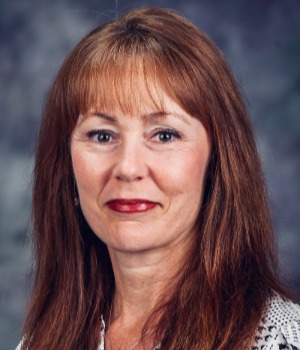
Dr. Barbara Mitchell
Associate Professor
K-State Department of Special Education, Counseling and Student Affairs
I always planned on becoming an elementary education teacher, so that’s what my undergraduate degree is in. I pursued a master’s degree, and as I was nearing the end of that program, I needed an elective course. I selected a class taught by two teachers from the local school district that focused on special education and kids with behavioral challenges. That class really inspired me and opened my eyes to special education. After taking that class, I got a certificate to teach special education.
I started working in an elementary school as a special education teacher, working with students from kindergarten to 5th grade. What stood out most was the kids with behavioral issues. I grew passionate about helping those students. I eventually moved to a middle school setting, and my classroom was primarily for kids with emotional behavior disorders. After 10 years in public schools, I moved to a university position. I spent 13 years there, doing research and teaching. I also worked with schools across the country to help implement a tiered system of support for students.
Now, this is my fifth year of teaching at K-State. I am currently teaching an introduction to disabilities and the behavior course in the Master of Arts in Teaching (MAT) program.
Where does your passion for special education come from: My K-12 teaching experience is really what drives me. I have seen many students who become marginalized and disconnected from school because of their behaviors. They have very poor outcomes, both short- and long-term. It is devastating to see a kid who’s bright, intelligent and capable be put in situations where it becomes difficult to always be emotionally, behaviorally and socially appropriate. I am passionate about helping them succeed and teaching other educators that we have to teach behaviors in the same way we teach reading and math. Our first move is often to move that student out of the classroom, but the more we push them out, the more disconnected they become. It doesn’t serve the student well, and it doesn’t serve society well in the long run either.
I think I have a heart for the underdog. These kids are often the ones whom others struggle to interact with, but I have had a little more success with them. It’s a good feeling to make a difference, and it’s what keeps me going.
What makes the MAT program special: I think our students would say the convenience of being fully asynchronous online [makes the MAT program special]. While that might not be as uncommon now, it is special for me as a faculty member because students are career-changers. They are sometimes retired military or stay-at-home moms, but the one thing they all have in common is the desire to become teachers. Each of these students has a lot of context and background experiences that make it really fun to interact with them.
What advice would you give to incoming MAT students: My advice would be to reach out to your professors and instructors. Reach out early if you need assistance or if circumstances arise where school can’t be your priority at the moment. It can be challenging in an asynchronous program to feel comfortable not only to reach out for assistance but to engage in conversation. We all want our students to be successful and to connect with them.