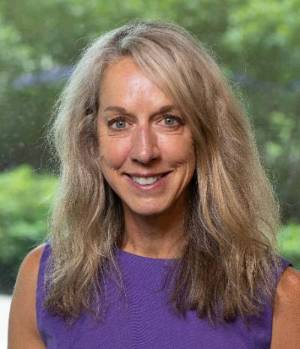
Lotta Larson
Professor
Associate Director, Master of Arts in Teaching
I began my career in education as a fifth-grade teacher in the Geary County and Manhattan school districts, and then started working with K-State as a clinical instructor. My job was to partner with schools and help place pre-service teachers in student-teaching positions. I decided I wanted to pursue a career in higher education and left the school district to begin my doctoral program at K-State. I earned my doctorate in 2007 and began as an instructor at K-State, then earned a position on the tenure track.
I absolutely love what I do. To me, it doesn’t matter what you’re teaching, whether it’s in a sixth-grade classroom, online, to doctoral students or to new career teachers. I absolutely love to teach.
Also, I am originally from Sweden. I came to the U.S. when I was a senior in high school. I was in a study-abroad exchange program for one year but decided to come back for college. Growing up, I was a track athlete and went to college for running. That is how I met my husband, who is from this area. We’ve been here ever since.
How did you help build the MAT program?
We recognized several people who wanted to become teachers but did not want to commit to getting another bachelor’s degree. It’s expensive and time-consuming. We felt there was a better way to reach and support them by getting into classrooms.
We discovered that cost, time, convenience and geographic location are barriers for adults returning to education, so we designed the Master of Arts in Teaching (MAT) program to be offered online for those seeking a career change. If you don’t have a degree in education but would like to pursue teaching, you can complete this program in 12 to 15 months and become a licensed teacher.
Over the past 10 years, we have seen many students successfully graduate from the program. When we first launched the program, we were unaware of how quickly it would grow. I believe it is because of the strong relationships we have built with the schools where students complete their student teaching and with the students themselves. If a superintendent or a principal is looking for good teachers, they trust that our graduates will do a good job for them.
What are your responsibilities within the MAT program?
I wear many hats because I teach multiple courses. One thing I enjoy about teaching multiple courses within the same program is getting to know these students across courses and semesters.
I also help with recruitment and marketing for the program. We want to make sure the information about our program reaches the people who need it—not just in Kansas but in other states as well. We have students from almost all 50 states and from other countries, which is really great.
What online teaching methods have you found successful?
As an online program, we’re very efficient. We try to make it personable and be in touch with students. The most difficult aspect of online teaching is that you don’t have the same opportunity to build relationships as in face-to-face classes. It can still be done well, and we do communicate through Zoom or other platforms. It’s important to build those relationships in an online, asynchronous program.
What are some of the challenges you faced when you began teaching in the classroom?
I have extremely high expectations for myself. That’s kind of self-imposed, but I think it’s important. I want to hold my students to a high standard, but that means I need to hold myself to one as well. You have to learn to shut it off. You don’t have to work every weekend, every single day. You don’t have to stay up until 10 p.m. to finish your plans for the next day. I think I’ve gotten better at balancing my personal life with work. That was definitely my biggest struggle when I first started teaching, both in the elementary school and at K-State.
How would your students describe you as a teacher?
I think they would say that I am very clear, like in my instructions and my expectations. I’m pretty consistent, and I try to be fair. I recognize that each student has different needs. I try to be compassionate because I cannot put myself in my students’ shoes. They may have had unique experiences I have not gone through, so I try to show compassion when they are going through a tough situation.
What is one piece of advice you would give to incoming MAT students?
My biggest piece of advice will vary depending on the student and their situation, but everyone should come in open-minded. Teaching methods are always changing, and how you were taught in grade school won’t be the same way to teach elementary, middle or high schoolers now.
It’s also really important to reach out if you have any concerns or issues. Don’t just sit with the problem and let it fester. Be open-minded and a great communicator. I think those are two key components of being a successful MAT student.